
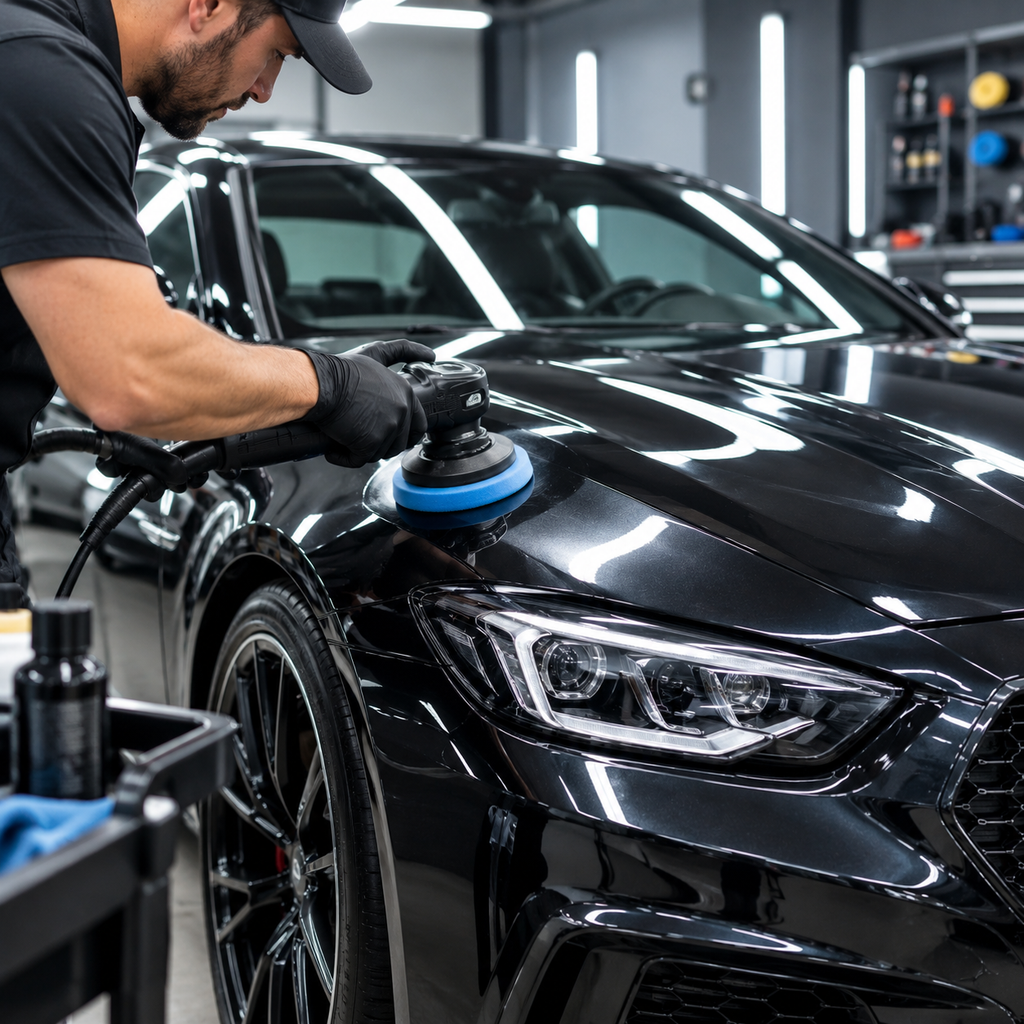
A shiny car can turn heads, but a closer look at the paint may reveal swirl marks, light scratches, water spots, and other flaws. These imperfections can make even a well-maintained vehicle look older than it is. If you want a cleaner, glossier finish that stays easier to maintain, paint correction and ceramic coating can work together to improve your car’s appearance and protect its surface.
However, the order matters. Ceramic coating is designed to protect the paint, not repair existing damage. Applying it before correcting visible imperfections can leave those flaws visible beneath the coating.
Understanding how these two services work together can help you choose the right treatment for your vehicle. Whether you drive through busy Brooklyn streets every day or keep your car parked outdoors, proper preparation is an important step toward a better finish.
What Is Paint Correction?
Paint correction is a process that uses special polishing tools, compounds, and techniques to reduce visible imperfections in a vehicle’s clear coat. The clear coat is the transparent outer layer that protects the colored paint underneath.
Over time, everyday use can leave this surface looking dull or scratched. Improper washing, dirty towels, automatic car washes, road debris, and environmental exposure can all contribute to these marks.
Paint correction helps improve the paint’s clarity and shine by carefully leveling the surface around certain defects.
Common imperfections that paint correction may reduce include:
- Swirl marks caused by improper washing or drying.
- Fine scratches that affect the paint’s appearance.
- Light oxidation that makes the finish look dull.
- Minor water spots and surface blemishes.
- Haze left by poor polishing or previous detailing.
Not every scratch can be removed safely. Deep scratches that reach through the clear coat may require a different repair method, and polishing too aggressively can damage the finish. A professional inspection helps determine what can realistically be improved.
What Is Ceramic Coating?
Ceramic coating is a liquid protective product that bonds with a vehicle’s properly prepared paint. After application and curing, it creates a durable protective layer that improves water repellency and helps the surface resist certain environmental contaminants.
Unlike traditional wax, which generally provides shorter-term protection, professional ceramic coatings are designed to offer longer-lasting performance when applied and maintained correctly.
Benefits can include:
- A glossy finish that enhances the paint’s appearance.
- Water beading that helps water move off the surface.
- Easier removal of many types of dirt and road grime.
- Added resistance to certain environmental contaminants.
- Less frequent need for traditional wax applications.
Ceramic coating does have limits. It does not make paint scratch-proof, prevent all chemical damage, or protect against every rock chip. Regular washing and proper maintenance remain necessary.
Most importantly, a coating does not correct scratches or swirl marks by itself. It protects the surface you prepare before application.
Why Paint Correction Should Come Before Ceramic Coating
The main reason to combine paint correction and ceramic coating Brooklyn drivers consider is that each service has a different purpose. Correction improves the finish, while coating protects the prepared surface.
Think of ceramic coating as the final protective layer on your paint. If swirl marks, scratches, or haze are present before application, those defects may remain visible after the coating cures.
Ceramic Coating Does Not Hide Existing Scratches
Ceramic coatings can add gloss, but they are not designed to fill or remove paint defects in the same way that polishing can reduce them.
In some lighting conditions, a glossy surface may make existing imperfections easier to notice. Sunlight, parking garage lights, and streetlights can reveal swirls that were less obvious on a dull surface.
Correcting suitable defects first helps create a cleaner-looking finish before protection is added.
Correction Helps Create a Better-Looking Result
Paint correction removes a controlled amount of clear coat to reduce certain surface imperfections. This can improve clarity, reflection, and overall gloss.
Once the paint has been corrected as needed, the technician can clean away polishing residue and prepare the surface for the coating.
The result is a finish that looks better because of the correction work, with the coating providing additional protection and water repellency.
Proper Preparation Supports Coating Performance
Ceramic coating needs a properly prepared surface to bond as intended. Dirt, embedded contamination, polishing oils, and leftover residue can interfere with application.
A thorough preparation process may include washing, chemical decontamination, clay treatment when appropriate, polishing, and a final surface wipe.
Skipping necessary preparation can affect the appearance and performance of the finished job. The right process depends on the vehicle’s condition and the coating manufacturer’s instructions.
One-Step vs. Multi-Step Paint Correction
Not every vehicle needs the same level of correction. The amount of polishing required depends on the paint’s condition, the type of defects, and the improvement you want.
One-Step Paint Correction
One-step correction usually involves a single machine-polishing stage using a suitable polish and pad combination.
It is often appropriate for vehicles with light swirl marks, minor haze, or a finish that needs a boost in clarity and gloss.
Benefits may include:
- A noticeable improvement in shine.
- Reduced appearance of light imperfections.
- Less time spent polishing.
- A practical option for relatively well-maintained vehicles.
One-step correction is not intended to remove every scratch. It balances improvement with the amount of work needed, making it useful when the paint does not have severe defects.
Multi-Step Paint Correction
Multi-step correction uses two or more polishing stages to address more noticeable imperfections.
A technician may begin with a more aggressive combination to reduce suitable defects, then use a finer polishing stage to improve clarity and remove haze left by the initial work.
This approach may be useful for vehicles with heavier swirl marks, moderate surface defects, or a finish that needs more extensive restoration.
Benefits may include:
- Greater reduction of suitable paint imperfections.
- Improved clarity and reflection.
- A more refined finish before coating.
- Better results on paint that needs additional polishing.
Multi-step correction generally takes more time and costs more. It also requires careful judgment because every polishing stage removes some clear coat. A professional should never promise that every defect can be removed safely.
Before and After: What Should You Expect?
Before-and-after photos can help you understand what paint correction can achieve. They are especially useful when comparing the condition of a vehicle before polishing with its appearance afterward.
Before correction: Under direct lighting, the paint may show circular swirl marks, fine scratches, haze, or a cloudy reflection. Dark-colored vehicles often make these imperfections easier to see.
After correction: The paint may display clearer reflections, a more even gloss, and fewer visible swirls. The improvement depends on the original condition and the correction method used.
When reviewing photos, look for images taken under similar lighting and from similar angles. This makes the comparison more meaningful.
Photos should also represent realistic results. Deep scratches, chips, and damage that extends beyond the clear coat may still be visible after correction.
For a strong visual comparison, include one before-and-after photo showing swirl marks under a light and another showing the improved reflection after polishing. These images can help readers understand the difference between correcting paint and simply adding shine.
How Brooklyn Driving Conditions Affect Your Car’s Paint
Driving and parking in Brooklyn can expose your vehicle to a mix of road grime, dust, rain, bird droppings, tree residue, and other contaminants.
Street parking can also make cars more vulnerable to environmental exposure. Frequent washing helps remove dirt, but improper washing methods may create additional swirl marks over time.
Winter road salt and grime can collect around lower doors, bumpers, and wheel areas. If contaminants remain on the surface, they can make routine cleaning more difficult and affect the vehicle’s appearance.
A well-planned detailing routine can help address these concerns. Paint correction improves the finish when suitable defects are present, while ceramic coating adds a protective layer that can make maintenance easier.
For drivers researching ceramic coating Brooklyn services, it is worth asking whether the provider checks the paint condition before recommending a coating. A newer vehicle may need limited polishing, while an older daily driver may benefit from more extensive correction.
How to Choose the Right Paint Correction and Ceramic Coating Package
The right paint correction and ceramic coating package should match your vehicle’s condition, your expectations, and your budget.
Before choosing a service, ask the detailer to explain the preparation process, the number of correction stages, the coating product, and the surfaces included.
Consider these points:
- Paint condition: Does the vehicle have light swirls or more noticeable defects?
- Correction stages: Is one-step polishing enough, or is multi-step correction more suitable?
- Coating coverage: Does the package protect painted panels only, or does it include wheels, rims, windows, or glass?
- Expected durability: What protection period does the manufacturer advertise, and what maintenance is required?
- Aftercare: How long must the coating cure before the vehicle can get wet or be washed?
Do not choose a package based on price alone. A lower-priced option may include basic preparation, while a more comprehensive package may include additional polishing and broader coating coverage.
You can compare the available options in this ceramic coating packages and pricing guide.
The best choice is the one that provides the preparation your paint actually needs without paying for unnecessary correction work.
How to Maintain Your Paint After Ceramic Coating
Even after correction and coating, regular care is essential. Good washing habits help preserve the finish and reduce the risk of introducing new swirl marks.
Follow these simple practices:
- Use a clean microfiber wash mitt and suitable car shampoo.
- Rinse away loose dirt before touching the paint.
- Avoid dirty towels, abrasive brushes, and harsh cleaning products.
- Remove bird droppings and other harmful contaminants promptly.
- Follow the coating manufacturer’s instructions for washing and maintenance.
- Ask your detailer when the vehicle is ready for its first wash after application.
Ceramic coating can make cleaning easier, but it does not eliminate the need for proper care. Regular maintenance helps preserve the appearance of both the corrected paint and the protective layer.
Get Professional Paint Correction and Ceramic Coating in Brooklyn
If your vehicle has swirl marks, light scratches, or a dull finish, combining correction with ceramic protection may be a worthwhile investment.
Big Shiny Apple Auto Wash Inc. offers auto detailing, paint correction, and R1 Coatings® ceramic coating services for New York City drivers. The team can help you discuss your vehicle’s condition, understand the available service packages, and determine what preparation may be appropriate before coating.
Visit Big Shiny Apple to explore its services and request an appointment. A professional assessment can help you choose a suitable approach for a cleaner finish and longer-lasting paint protection.
Frequently Asked Questions
Do I need paint correction before ceramic coating?
Not always. If your paint is already in excellent condition, extensive correction may not be necessary. However, if you have visible swirl marks, scratches, or haze, correcting suitable defects before coating can improve the final appearance.
Can ceramic coating remove swirl marks?
No. Ceramic coating is a protective product, not a paint correction treatment. Swirl marks generally need to be reduced through suitable polishing before the coating is applied.
Is one-step or multi-step paint correction better?
It depends on the paint’s condition. One-step correction may work well for light imperfections and gloss improvement. Multi-step correction may be more appropriate for heavier defects that can be safely reduced through additional polishing.
How long does paint correction and ceramic coating take?
The time varies based on vehicle size, paint condition, the number of correction stages, and the coating’s application requirements. A basic job may take several hours, while more extensive correction and coating can take a full day or longer.
Does ceramic coating prevent scratches?
No. Ceramic coating can provide protection against certain contaminants and minor surface wear, but it does not make paint scratch-proof or prevent rock chips. Careful washing and maintenance are still important.
How long does ceramic coating last?
Durability depends on the coating product, preparation, driving conditions, and maintenance. Some professional products are advertised to last several years, but the actual lifespan varies. Ask about the product’s stated durability and care requirements before booking.
Is a paint correction and ceramic coating package worth the cost?
It may be worthwhile if you want to improve the appearance of your paint and add longer-term protection. The value depends on the vehicle’s current condition, the amount of correction required, the coating used, and the surfaces covered by the package.