
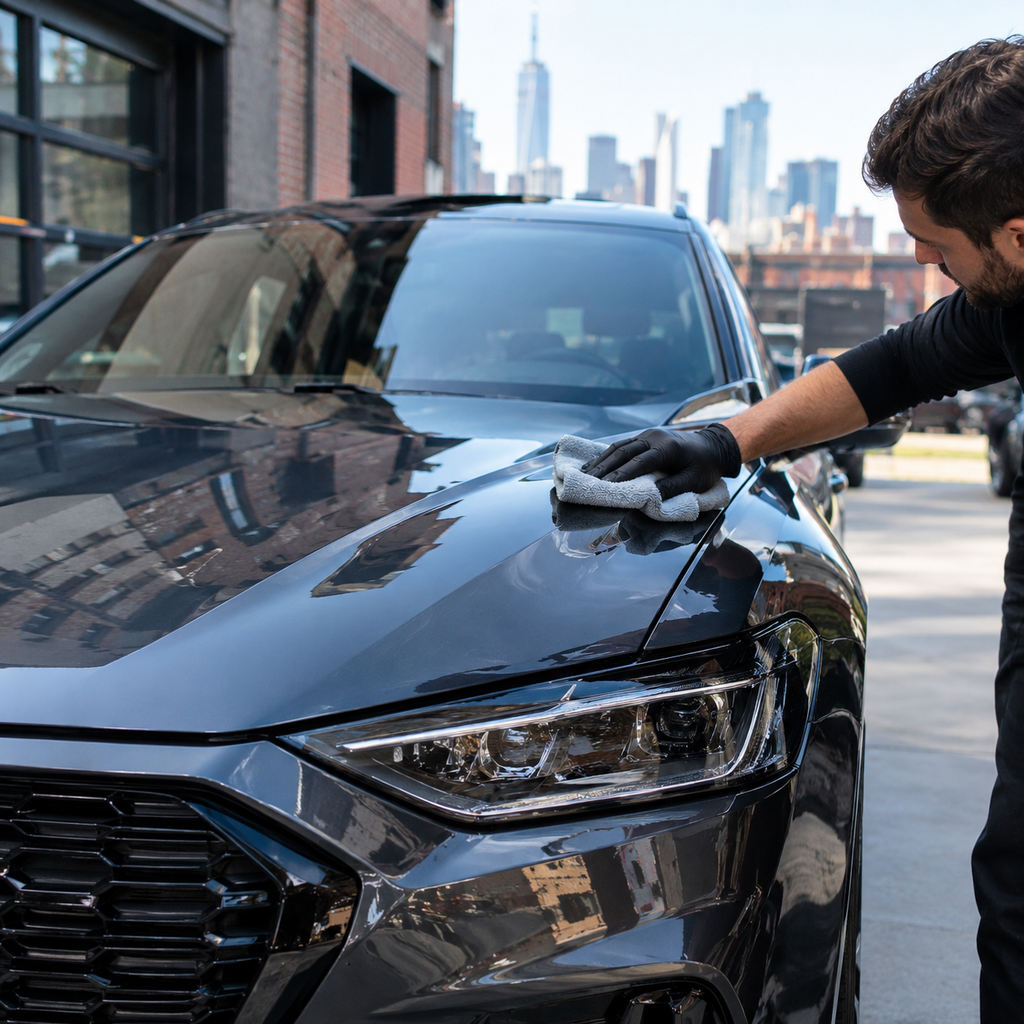
Ceramic coating is a liquid protective layer applied to a vehicle’s exterior paint. Once it cures, it creates a durable surface that helps protect the paint from everyday dirt, road grime, and certain environmental contaminants. It also adds shine and helps water slide off the vehicle more easily.
For drivers who park outside or travel through busy city streets, this protection can make regular car care easier. Traffic pollution, rain, bird droppings, and winter road salt can all affect a vehicle’s appearance over time.
Unlike traditional car wax, which usually wears away faster, a professional ceramic coating can last for years when applied correctly and maintained well.
However, ceramic coating is not a magic shield. It cannot prevent every scratch, stop rock chips, or replace regular washing. Its main purpose is to protect the paint surface and make the vehicle easier to clean.
How Does Ceramic Coating Work?
Ceramic coatings contain protective compounds that form a durable layer over a vehicle’s paint. Many professional products use silica-based chemistry, although the exact formula depends on the product.
During application, the coating spreads across the prepared paint and bonds to the surface as it cures. This creates a protective layer that improves water behavior and helps reduce the way dirt and contaminants stick to the paint.
What Makes Nano Ceramic Coatings Different?
Nano ceramic coatings use very small particles and advanced coating formulas to create a thin, even protective layer. These products are designed to improve gloss, water repellency, and resistance to certain environmental contaminants.
A quality nano ceramic coating for cars can provide several benefits:
- Water repellency: Water forms beads and rolls off more easily.
- Easier cleaning: Dirt and grime are often easier to remove.
- Enhanced shine: Paint can look deeper and more polished.
- Environmental protection: The coating helps reduce the impact of some common contaminants.
Results depend on the coating formula, application quality, paint condition, and maintenance routine.
Benefits of Ceramic Coating in Brooklyn and NYC
Driving in New York City creates special challenges for vehicle paint. Cars face crowded streets, limited parking, changing weather, and frequent exposure to dirt and pollution.
1. Protection Against Winter Road Salt
Road salt helps control icy roads during winter, but salt residue can collect on a vehicle’s body, wheels, and lower panels. If left in place, salt and other road contaminants can contribute to corrosion, especially on exposed metal and damaged surfaces.
Ceramic coating helps protect painted surfaces and makes salt residue easier to wash away. Still, regular winter washing is essential because the coating does not eliminate the risk of rust or protect every exposed part of the vehicle.
2. Easier Cleaning for Street-Parked Cars
Street parking exposes vehicles to dust, traffic film, rainwater, tree sap, and other contaminants. Over time, these materials can make paint look dull and dirty.
A coated vehicle is generally easier to wash because grime has a harder time sticking firmly to the surface. This can save time during routine cleaning, especially for drivers who park outdoors every day.
3. Help Against Bird Droppings and Tree Sap
Bird droppings and tree sap can damage automotive paint if they remain on the surface for too long. Heat and sunlight can make the problem worse.
Ceramic coating can provide some resistance to these contaminants, but it does not make paint stain-proof. Remove bird droppings and sap as soon as possible using safe cleaning methods.
4. Better Gloss and Water Repellency
A hydrophobic ceramic coating car treatment makes water bead up and move across the surface more easily. This helps reduce water retention and can make washing and drying more convenient.
The coating can also enhance the paint’s shine, giving the vehicle a cleaner, more polished appearance.
How Long Does Ceramic Coating Last?
Ceramic coating lifespan depends on the product, paint preparation, driving conditions, and aftercare. Not every coating offers the same level of durability.
| Coating type | Typical protection period |
| Entry-level ceramic coating | Around 1 year |
| Mid-range professional coating | Around 2–3 years |
| Premium professional coating | Around 4–5 years or longer, depending on the product |
These periods are general estimates, not guarantees. Always check the manufacturer’s stated lifespan, warranty terms, and maintenance requirements.
Is a 5 Year Ceramic Coating Worth It?
A 5 year ceramic coating Brooklyn option may suit drivers who want long-term paint protection without applying a new coating every year. It can be especially useful for daily drivers, luxury vehicles, and cars that spend much of their time outdoors.
Before choosing a package, ask what the five-year claim covers. Find out whether the coating includes a warranty, whether regular inspections are required, and whether additional maintenance products or services are recommended.
A longer-lasting coating may cost more upfront, but it can be worthwhile if you plan to keep the vehicle for several years and are willing to maintain it properly.
What Happens Before Ceramic Coating Is Applied?
Preparation is one of the most important parts of the coating process. Applying a premium product over dirty or damaged paint can lead to poor results.
Step 1: Thorough Washing
The vehicle is washed to remove loose dirt, road grime, and surface contaminants. Wheels, body panels, and other areas are cleaned carefully.
Step 2: Paint Decontamination
Detailers may use specialized cleaners and a clay treatment to remove contaminants that regular washing cannot remove. This helps create a smoother surface for the coating.
Step 3: Paint Correction
If the paint has swirl marks, light scratches, or dull areas, polishing may be needed before coating. Paint correction improves the finish by reducing visible imperfections.
Not every car needs extensive correction. The correct level of polishing depends on the paint’s condition and the owner’s expectations.
Step 4: Coating Application and Curing
The detailer applies the coating according to the product’s instructions. The coating then needs time to cure. During this period, the vehicle may need protection from rain, moisture, dust, or other conditions specified by the manufacturer.
Following the installer’s instructions helps the coating develop properly.
How to Maintain a Ceramic-Coated Car
Good aftercare helps preserve the coating’s performance and appearance.
- Wash regularly: Use a car-safe shampoo and clean washing tools.
- Avoid harsh chemicals: Strong cleaners can affect the coating or damage other vehicle surfaces.
- Use safe washing methods: Wash gently to reduce the chance of swirl marks.
- Remove contaminants quickly: Clean bird droppings, sap, and other harmful substances promptly.
- Dry the vehicle carefully: Use a clean, soft microfiber towel to help prevent water spots.
- Follow maintenance recommendations: Use suitable products and schedule professional checks when advised.
Avoid automatic washes that use abrasive brushes, especially if you want to minimize swirl marks. If water stops beading as strongly as before, the surface may need cleaning or maintenance. Reduced beading does not always mean the coating has completely failed.
Is Ceramic Coating Better Than Wax?
Ceramic coating and wax both help protect vehicle paint, but they differ in durability and performance.
Wax is usually less expensive and offers temporary protection. Ceramic coating generally lasts longer, provides stronger water repellency, and makes routine cleaning easier. However, ceramic coating usually costs more and requires careful surface preparation.
Wax may suit drivers who want a simple, short-term finish. Ceramic coating may be a better choice for people who want longer-lasting protection and are comfortable investing in professional application and regular maintenance.
Neither option makes a vehicle completely resistant to scratches or paint damage.
How to Choose the Right Ceramic Coating Service
When comparing ceramic coating NYC providers, look beyond the advertised lifespan. The quality of the preparation and application matters just as much as the product itself.
Ask these questions before booking:
- Which coating product will be applied?
- How long is the product expected to last?
- Is paint correction included in the package?
- Which vehicle surfaces are covered?
- What does the warranty include?
- What maintenance is required after application?
Compare the full service details rather than choosing based on price alone. A clear explanation of preparation, coating coverage, curing, and aftercare can help you make a better decision.
Protect Your Vehicle With Big Shiny Apple
If you are considering ceramic coating for your vehicle, Big Shiny Apple Auto Wash Inc. offers professional auto detailing, paint correction, and R1 Coatings® ceramic protection for NYC drivers. Its listed coating packages include a professional option advertised with five-year protection, with package details and pricing varying by vehicle and service selection.
Explore the ceramic coating and detailing services to compare available options, or visit the R1 Coatings® information page to explore more about the coating system. Contact the team to discuss your vehicle’s condition and the protection that best fits your needs.
Frequently Asked Questions
How much does ceramic coating cost in Brooklyn?
The cost depends on the vehicle’s size, paint condition, coating product, and amount of paint correction required. Professional packages can vary widely, so request a quote that explains the preparation, coverage, and warranty.
How long does ceramic coating last in NYC?
Depending on the product and maintenance, ceramic coating may last around one year to five years or longer. City driving, outdoor parking, and poor washing habits can affect its performance.
Does ceramic coating protect against road salt?
Ceramic coating helps protect painted surfaces from some environmental contaminants and makes salt residue easier to remove. It does not eliminate corrosion risk, so regular winter washing remains important.
Does ceramic coating prevent scratches?
No. Ceramic coating can offer limited resistance to light surface marks, depending on the product, but it does not prevent all scratches, dents, or rock chips. Paint protection film is a better option for physical impact protection.
Can I wash my car after ceramic coating?
Yes, but follow the installer’s instructions about the initial curing period. After the coating has cured, wash the vehicle regularly with car-safe products and gentle techniques.
Is professional ceramic coating better than a DIY kit?
Professional application often includes deeper cleaning, paint decontamination, and correction when needed. DIY kits may cost less, but the final result depends on product quality, preparation, and application skill.
Is ceramic coating worth it for street parking in Brooklyn?
It can be worthwhile because it makes regular cleaning easier and helps protect paint from common environmental contaminants. However, it will not prevent every type of damage from outdoor parking.
Does a five-year ceramic coating need maintenance?
Yes. Even a long-lasting coating needs regular washing and proper care. Follow the manufacturer’s instructions and check whether the package includes specific maintenance or warranty requirements.