
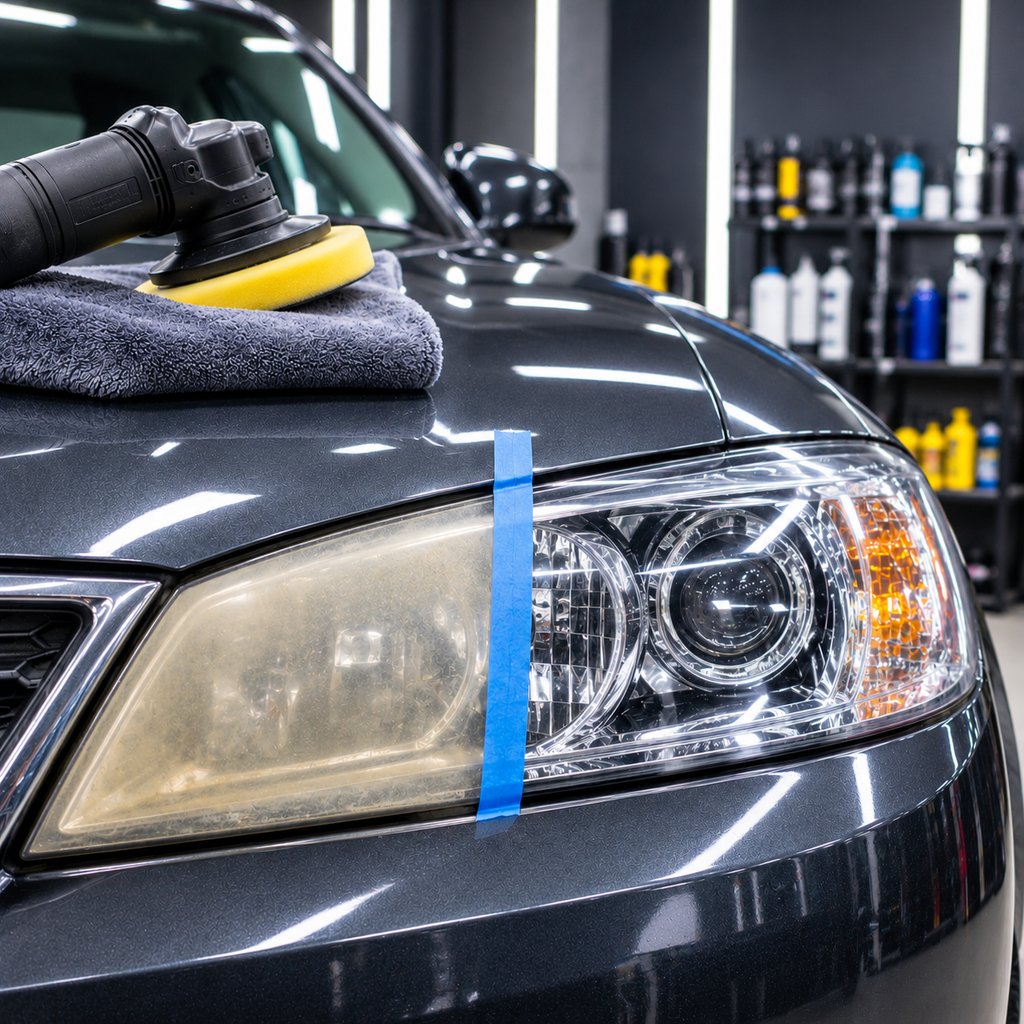
Cloudy, yellow, or faded headlights can make an otherwise clean vehicle look old and poorly maintained. More importantly, damaged headlight lenses can reduce the amount of light reaching the road, making nighttime driving more difficult.
NYC drivers face different road and weather conditions throughout the year. Sun exposure, dirt, road debris, and everyday wear can slowly damage the protective surface of headlight lenses.
The good news is that replacing the entire headlight assembly is not always necessary. Headlight restoration NYC services can help improve cloudy lenses by removing oxidation, polishing the surface, and applying protective coatings.
But what actually happens during professional restoration? How long does it take, and how long can the results last?
This guide explains the complete process so you can decide whether professional restoration is the right choice for your vehicle.
What Is Headlight Restoration?
Headlight restoration is a process that improves the clarity and appearance of cloudy or yellowed headlight lenses.
Most modern vehicle headlights use polycarbonate plastic instead of traditional glass. This material is lightweight and durable, but its outer protective coating can break down after years of exposure to sunlight and other environmental conditions.
When this happens, headlights may develop:
- Yellow or brown discoloration
- Cloudy or hazy surfaces
- Oxidation and fading
- Small surface scratches
- A dull or uneven appearance
Professional restoration removes damaged surface layers and improves the clarity of the plastic. A protective UV coating is then applied to help slow down future damage.
For many vehicles, this can be a more affordable option than replacing the entire headlight assembly.
How Professional Headlight Restoration NYC Works
A professional restoration service usually involves three main stages: sanding, polishing, and UV sealing. Each stage has a specific purpose, and skipping one can affect the final result.
Here is what happens during the process.
Step 1: Headlight Inspection and Preparation
Before starting, the technician checks both headlights to understand their condition.
This inspection helps identify the type and level of damage. Light oxidation may require less work, while heavily yellowed lenses may need several sanding stages.
The technician also checks for cracks, deep damage, and signs of internal moisture.
Next, the surrounding areas are cleaned and protected. Masking tape is placed around the headlights to help prevent sanding materials and polishing compounds from damaging nearby paint or trim.
Proper preparation helps create a cleaner and safer working area.
Step 2: Sanding Away Oxidation
Sanding is one of the most important stages of professional headlight restoration.
Over time, the outer protective coating can break down and leave the plastic surface rough, yellow, or cloudy. Simply washing the headlights will not remove this type of damage.
The technician uses suitable abrasive materials to remove the damaged outer layer.
The process may involve several sanding stages with different levels of abrasiveness.
- Initial sanding: Removes heavy oxidation and yellow discoloration.
- Intermediate sanding: Smooths the surface and removes marks left by the first stage.
- Final sanding: Creates a more even surface for polishing.
Wet sanding is commonly used to help control heat and remove sanding residue.
The technician must work carefully because excessive sanding can damage the lens. The goal is to remove the damaged surface without taking away more material than necessary.
Step 3: Polishing for Clear Results
After sanding, the headlight surface may look cloudy or have fine sanding marks. This is normal because sanding prepares the lens for the next stage.
Polishing restores smoothness and improves clarity.
A professional polishing compound and suitable polishing pad are used to refine the plastic surface. The technician works across the lens to remove fine sanding marks and improve its transparency.
Proper polishing can help restore:
- A clearer headlight appearance
- Better light transmission through the lens
- A smoother surface
- A more even finish
- A cleaner overall vehicle appearance
The result depends on the original lens condition. Deep cracks, internal damage, and severe pitting cannot always be corrected through polishing.
Step 4: UV Sealing and Protection
The final stage is applying a protective UV sealant or suitable coating.
This step is important because sanding removes the damaged factory coating. Without new protection, the exposed plastic can become cloudy or yellow again after continued sunlight exposure.
A suitable UV-resistant protective product helps slow down oxidation and protects the restored surface.
The technician applies the coating evenly and follows the product’s drying or curing instructions.
Depending on the product used, the vehicle may need to remain dry for a certain period after treatment.
UV sealing helps extend the life of the restoration, but it does not make the headlights permanently immune to sun damage.
What Results Can You Expect After Headlight Restoration?
The main goal of professional restoration is to improve headlight clarity.
Before treatment, the lenses may appear yellow, hazy, or dull. After a successful restoration, they should look clearer, smoother, and more transparent.
You may notice several improvements:
- Less visible yellowing and oxidation
- Better-looking headlight lenses
- Improved light transmission when surface haze was reducing clarity
- A cleaner and newer-looking vehicle front end
- Better overall appearance
Restoration may also improve nighttime visibility when cloudy exterior lenses are blocking or scattering light.
However, results depend on the condition of the headlight assembly. Restoration cannot repair damaged bulbs, faulty wiring, broken reflectors, or internal condensation.
How Long Does Professional Headlight Restoration Take?
Most straightforward professional restorations take approximately one to two hours for both headlights.
However, the actual appointment time depends on several factors:
Condition of the Headlights
Lightly cloudy lenses may require less sanding and polishing. Heavily oxidized headlights need more preparation and additional work.
Size and Shape of the Lenses
Some modern vehicles have large or curved headlight assemblies. These designs may take longer to sand and polish evenly.
Type of Protective Coating
Different UV sealants have different application and curing requirements. Some products dry quickly, while others need additional time before the vehicle can be exposed to water.
Before booking, ask the technician how long the service will take and whether you need to avoid washing or exposing the vehicle to rain afterward.
How Long Do Headlight Restoration Results Last?
The lifespan of restored headlights depends heavily on the protective coating applied after sanding and polishing.
As a general guide, a properly completed restoration with suitable UV protection may last around one to three years or longer. However, this is not a guaranteed lifespan.
Several factors can affect how long the results last.
- Sun exposure: Vehicles parked outside for long periods may experience faster oxidation.
- Weather conditions: Changing temperatures and environmental exposure can affect protective coatings.
- Cleaning products: Harsh chemicals and abrasive cleaning materials may damage the protective layer.
- Coating quality: Different UV sealants offer different levels of protection.
- Maintenance: Regular, gentle cleaning can help maintain the restored appearance.
Ask your detailer which protective product is being used and what maintenance instructions apply.
When Should You Choose Restoration Instead of Replacement?
Restoration is often suitable when the main problem is external oxidation, yellowing, or surface haze.
However, not every headlight can be restored.
| Headlight Condition | Recommended Option |
| Light yellowing | Restoration |
| External cloudiness | Restoration |
| Surface oxidation | Restoration |
| Minor surface scratches | Restoration may help |
| Cracked lens | Replacement may be needed |
| Internal moisture | Inspection and possible replacement |
| Damaged internal reflector | Professional inspection and possible replacement |
If the headlight housing is cracked or the internal components are damaged, polishing the outside will not solve the problem.
A professional inspection can help determine whether restoration is practical or replacement is the better option.
Why Choose Professional Headlight Restoration Brooklyn?
Some vehicle owners try household products or DIY restoration kits to remove yellowing. These methods may provide temporary improvements, but the results depend on the materials and techniques used.
Professional headlight restoration Brooklyn services offer a more structured approach.
A professional technician can:
- Inspect the lens before starting.
- Select suitable sanding materials.
- Protect surrounding paint and trim.
- Polish the surface evenly.
- Apply appropriate UV protection.
- Explain the correct aftercare process.
The protective stage is especially important. Polishing alone may improve clarity temporarily, but it does not replace the UV protection removed during restoration.
For more information about complete vehicle care, explore our full detailing service page.
Keep Your Headlights Clear With Big Shiny Apple
Clear headlights help your vehicle look better and support safer driving. If your lenses have become yellow, cloudy, or dull, professional restoration may help improve their appearance without replacing the entire assembly.
Big Shiny Apple Auto Wash Inc. provides professional auto detailing, headlight restoration, paint correction, and ceramic coating services for NYC drivers.
The team uses professional vehicle care techniques to clean, restore, and protect different vehicle surfaces.
If you want to improve the appearance of your headlights, contact Big Shiny Apple to learn more about its headlight restoration service.
You can also contact the team at 929-665-3067 or 929-669-8981 to discuss your vehicle’s condition and service options.
Frequently Asked Questions
How much does headlight restoration cost in NYC?
The cost depends on the vehicle, the condition of the headlights, and the restoration method required. Light oxidation may need less work than heavily yellowed or damaged lenses. Contact a professional detailer for a vehicle-specific quote.
How long does professional headlight restoration take?
A typical restoration takes around one to two hours for both headlights. Heavily damaged lenses or additional coating requirements may increase the appointment time.
Does headlight restoration improve nighttime visibility?
It can help when external oxidation and cloudiness reduce the amount of light passing through the lenses. However, it cannot repair faulty bulbs, damaged reflectors, or electrical problems.
How long does headlight restoration last?
Professional restoration with suitable UV protection may last around one to three years or longer. Sun exposure, coating quality, weather, and maintenance all affect the lifespan.
Can yellow headlights be restored?
Yes. Most headlights with external yellowing and oxidation can be improved through sanding, polishing, and protective sealing. However, cracked lenses and internal damage may require replacement.
Is sanding necessary for headlight restoration?
Sanding is commonly used when headlights have significant oxidation or damaged outer coatings. It removes the affected surface layer and prepares the lens for polishing. Lightly hazy lenses may need a different treatment.
Why is UV sealing important after headlight restoration?
Sanding removes the damaged factory coating, exposing the plastic underneath. UV sealing adds a protective layer that helps slow down future yellowing and oxidation.
Is professional headlight restoration better than a DIY kit?
Professional restoration can provide more consistent results because technicians use controlled sanding, polishing, and protective application techniques. DIY kits may work for minor damage, but incorrect use can leave scratches or uneven finishes.
Can every cloudy headlight be restored?
No. External oxidation and surface haze are often treatable, but deep cracks, severe internal damage, broken housings, and damaged reflectors may require replacement.
Does headlight restoration make headlights look new again?
It can significantly improve their clarity and appearance. However, the final result depends on the lens condition, and restoration cannot always remove deep scratches or structural damage.