
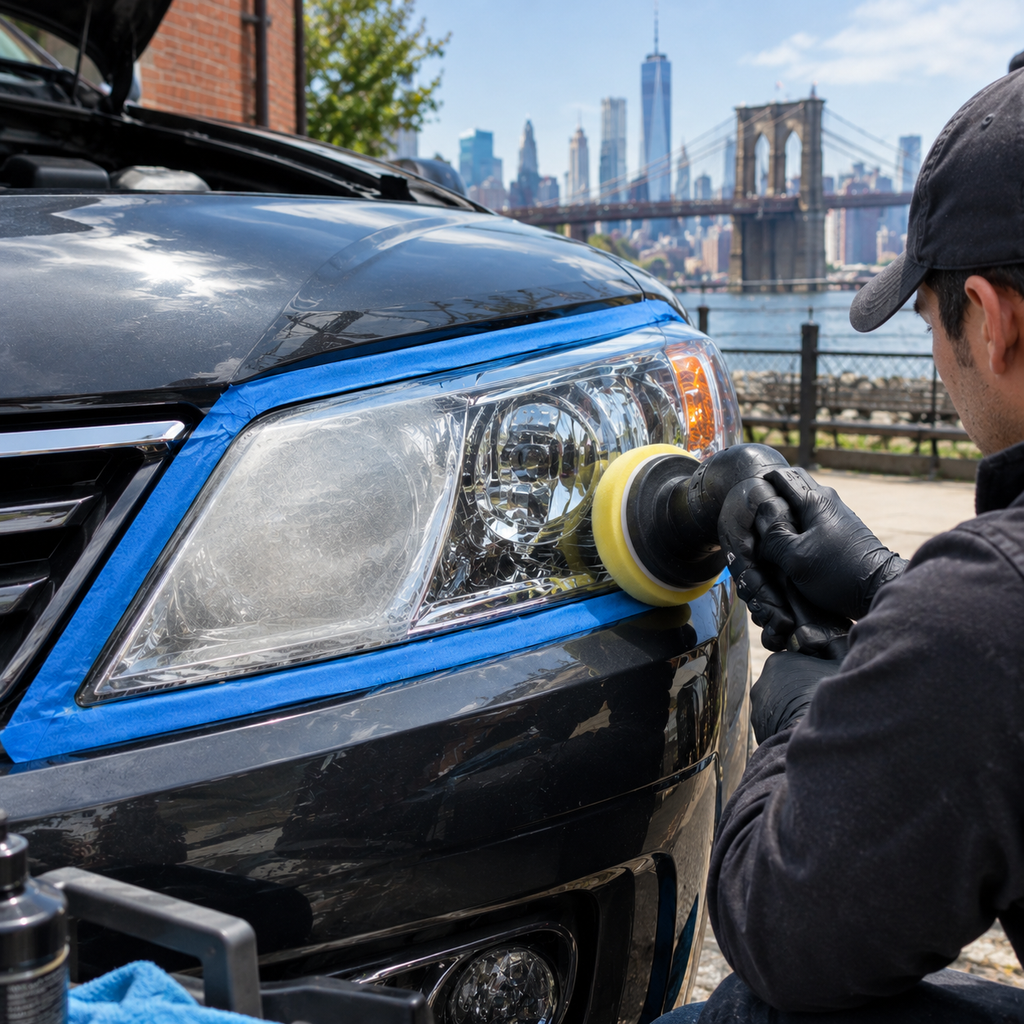
Cloudy or yellow headlights can make an otherwise clean car look old and poorly maintained. More importantly, hazy headlight lenses can reduce the amount of light reaching the road, making it harder to see clearly at night or during bad weather.
Over time, sunlight, road dirt, weather, and everyday driving can damage the outer surface of headlight lenses. Regular washing may remove dirt, but it cannot always clear the haze or discoloration that develops beneath the surface.
Professional restoration can improve the appearance of cloudy headlights and may help restore light output when the problem is caused by surface damage. It can also be a more affordable option than replacing the entire headlight assembly when the damage is limited to the lens.
This guide explains how headlight restoration Brooklyn drivers can consider works, why headlights become cloudy, what affects the cost, how long results may last, and when replacement is the better choice.
What Is Headlight Restoration?
Headlight restoration is a process that improves the appearance and clarity of cloudy, yellowed, or oxidized headlight lenses. Most modern vehicles use plastic headlight lenses that can become damaged by sunlight and environmental exposure.
As the outer surface deteriorates, the lenses may develop a cloudy film, yellow tint, or rough appearance. This can affect the way light passes through the lens.
A professional headlight restoration service may involve cleaning, sanding, polishing, and applying a protective coating, depending on the condition of the lens and the restoration method used.
The main benefits can include:
- Improving the clarity of cloudy headlight lenses.
- Reducing yellowing and visible surface oxidation.
- Improving the vehicle’s overall appearance.
- Helping restore light output when surface haze is the cause of reduced performance.
- Avoiding unnecessary replacement when the lenses can be restored safely.
Restoration cannot fix every headlight problem. Cracks, internal moisture, damaged reflectors, failed bulbs, and internal electrical issues may require separate repairs or replacement.
Why Do Headlights Become Cloudy or Yellow?
Headlight lenses are exposed to the elements every time you drive or park your vehicle outdoors. Several factors can gradually affect their appearance.
1. Sunlight and UV Exposure
Ultraviolet (UV) radiation from sunlight is one of the main causes of headlight yellowing and oxidation. Many plastic headlight lenses have a factory-applied protective coating, but that coating can deteriorate over time.
Once the protection breaks down, the plastic surface may become dull, cloudy, or yellow.
Vehicles parked outdoors for long periods may experience more noticeable damage because their headlights receive repeated exposure to direct sunlight.
2. Road Dirt and Environmental Contaminants
Brooklyn and the wider NYC area expose vehicles to traffic pollution, dust, road grime, and changing weather conditions.
These contaminants can collect on headlight lenses and make them look dirty. While washing can remove surface buildup, it will not reverse oxidation that has already damaged the lens surface.
3. Scratches and Surface Wear
Small scratches can develop from road debris, improper cleaning, abrasive materials, or general wear.
As these marks build up, the headlight lens may scatter light instead of allowing it to pass through clearly. Careful restoration may reduce suitable surface imperfections.
4. Aging and Weather Exposure
Rain, temperature changes, and years of use can contribute to the deterioration of headlight lenses and their protective coatings.
Older vehicles may develop deeper discoloration or surface damage that requires more extensive restoration. If the lens is cracked or damaged internally, however, polishing alone will not solve the problem.
How Does Professional Headlight Restoration Work?
The exact process depends on the lens condition, the restoration products used, and the amount of damage present. A professional assessment helps determine which steps are necessary.
Step 1: Inspect and Clean the Headlights
The technician examines the lenses to identify yellowing, oxidation, scratches, cracks, and signs of internal moisture.
The headlights are then cleaned to remove loose dirt and surface contaminants. This helps reveal the actual condition of the lens before restoration begins.
Step 2: Sand the Damaged Surface When Needed
If the outer layer has significant oxidation, controlled sanding may be needed to remove the damaged surface.
The technician selects suitable abrasives and works carefully to avoid unnecessary material removal. Not every headlight requires sanding; lighter surface haze may need a less aggressive approach.
Step 3: Polish the Lens
After the necessary preparation, polishing helps refine the surface and improve clarity.
The goal is to reduce the appearance of oxidation and suitable surface imperfections while creating a smoother finish. The final result depends on the depth of the damage and the condition of the plastic.
Step 4: Apply UV Protection
Applying a suitable protective coating is an important part of many restoration processes. Without renewed protection, a restored lens may become cloudy or yellow again as the plastic is exposed to sunlight.
The type of protection used can affect how long the restored finish lasts. Ask the provider what product is applied and whether it is designed specifically for restored headlight lenses.
Step 5: Check the Final Result
After restoration, the technician checks the clarity and appearance of the lenses. If reduced light output is caused by other issues, such as weak bulbs or damaged internal components, further inspection may be necessary.
How Much Does Headlight Restoration Cost in Brooklyn and NYC?
The cost of headlight restoration Brooklyn drivers pay depends on the vehicle, the condition of the lenses, and the work required.
A lens with light surface haze may need less preparation than one with heavy oxidation, deep scratches, or a badly deteriorated protective layer.
Several factors can affect the final quote:
- Condition of the lenses: Heavily oxidized headlights may require more preparation and polishing.
- Vehicle type: Some headlight assemblies have complex shapes that require additional care.
- Restoration method: Different levels of sanding, polishing, and finishing can affect labor time.
- Protective coating: The type of UV-resistant finish used may influence the service price.
- Additional repairs: Cracks, internal condensation, or damaged components may require work beyond restoration.
When comparing professional headlight restoration services, ask what the quoted price includes. Find out whether cleaning, sanding, polishing, and UV protection are part of the package.
How Long Does Headlight Restoration Last?
Restoration results can last for months or years, depending on the quality of the work, the protective coating, and how the vehicle is maintained.
There is no single lifespan that applies to every vehicle. A properly restored lens with suitable UV protection may remain clear much longer than a lens that is polished without adequate protection.
To help maintain the results:
- Wash the headlights with suitable automotive cleaning products.
- Avoid abrasive pads and harsh chemicals that may damage the lens.
- Follow the technician’s aftercare instructions.
- Keep the vehicle clean and remove stubborn contaminants carefully.
- Ask whether the protective coating needs inspection or reapplication.
Parking in a garage or shaded area when possible can also reduce direct sunlight exposure.
If the headlights begin to look hazy again, have them inspected before attempting aggressive polishing yourself. Repeated sanding can remove too much material and may shorten the useful life of the lens.
Headlight Restoration vs. Replacement: Which Is Better?
Restoration and replacement solve different problems. The right choice depends on whether the damage is limited to the outer surface or affects the headlight assembly itself.
When Restoration Makes Sense
Restoration may be a suitable option when the lenses are cloudy, yellowed, or lightly scratched but remain structurally sound.
It can improve appearance without requiring a complete assembly replacement. For many vehicles, this makes restoration a practical option when the main problem is surface oxidation.
When Replacement Is Better
Replacement may be necessary if the headlight lens is cracked, broken, severely damaged, or affected by persistent internal moisture.
It may also be required if the reflector, internal components, or housing has failed. In these cases, polishing the outside will not correct the underlying problem.
Compare the Cost and Condition
Before choosing either option, ask a professional to inspect the headlights and explain what can realistically be repaired.
Restoration is often less expensive than replacing an entire headlight assembly, but that is not guaranteed for every vehicle. The cost of replacement depends on the make, model, parts availability, and whether the assembly contains specialized lighting technology.
A damaged or unsafe headlight should not be restored simply to avoid replacement costs. The priority should be safe and reliable lighting.
How to Maintain Clear Headlights After Restoration
Once the headlights have been restored, a few simple habits can help preserve their appearance.
Clean the Lenses Regularly
Use automotive shampoo and a soft microfiber cloth to remove ordinary dirt. Avoid aggressive scrubbing, which can create new scratches or damage the protective surface.
Use Suitable Protective Products
If the restoration service includes a UV-resistant coating, follow the manufacturer’s maintenance instructions. Do not assume that ordinary wax or a general-purpose cleaner offers the same level of protection.
Check Your Lights Periodically
Look at the headlights in daylight and check that both lights operate properly. If visibility remains poor after restoration, have the bulbs, alignment, and internal components inspected.
Address New Damage Early
Small areas of haze may be easier to manage than extensive deterioration. If yellowing returns, consult a professional before trying a home restoration kit or an aggressive polishing method.
Professional Headlight Restoration in Brooklyn and NYC
Cloudy headlights can affect your vehicle’s appearance and may reduce visibility when surface oxidation interferes with light output. Restoring suitable lenses can improve clarity, refresh the look of your car, and help you avoid replacement when it is not necessary.
Big Shiny Apple Auto Wash Inc. offers professional headlight restoration as part of its vehicle care services. The team can help you understand whether restoration is suitable for your headlights and what work may be needed to improve their condition.
To learn more or contact Big Shiny Apple for service information and pricing. A professional assessment can help you decide whether restoration or replacement is the better option for your vehicle.
Frequently Asked Questions
What causes headlights to turn yellow?
Headlights often turn yellow because sunlight and UV radiation gradually damage the protective coating on plastic lenses. Aging, weather exposure, and surface wear can also contribute to discoloration.
Is professional headlight restoration worth it?
It can be worthwhile when the problem is mainly surface oxidation, cloudiness, or light scratches. Restoration may improve clarity and appearance at a lower cost than replacing the complete assembly, although results depend on the lens condition.
Can headlight restoration improve nighttime visibility?
It may improve visibility when cloudy or oxidized outer lenses are blocking or scattering light. However, it cannot fix weak bulbs, incorrect headlight alignment, damaged reflectors, or other internal problems.
How long does headlight restoration last?
Results can last for months or years, depending on the restoration method, UV protection, weather exposure, and maintenance. Ask the provider about the protective coating and recommended aftercare.
Can yellow headlights be repaired without replacement?
Often, yes. If the yellowing is caused by oxidation on the outer surface and the lens remains structurally sound, restoration may be possible. Cracked lenses and internal damage may require replacement.
Is headlight restoration cheaper than replacement?
Restoration is often less expensive when the lens can be repaired safely. Replacement costs vary based on the vehicle, headlight technology, and parts availability, so compare both options when significant damage is present.
Can I restore cloudy headlights myself?
DIY kits are available for light to moderate oxidation, but results depend on proper preparation and UV protection. Incorrect sanding or polishing can damage the lens, so professional help may be a better choice for severe cloudiness.
Does headlight restoration fix moisture inside the headlight?
When should I replace my headlights instead of restoring them?
No. Restoration treats the exterior lens surface. Internal moisture may indicate a failed seal, crack, or housing problem that needs separate diagnosis and repair.
Replacement may be necessary when the lens is cracked or broken, the housing leaks, internal components are damaged, or restoration cannot restore safe lighting performance. A professional inspection can help determine the appropriate solution.