
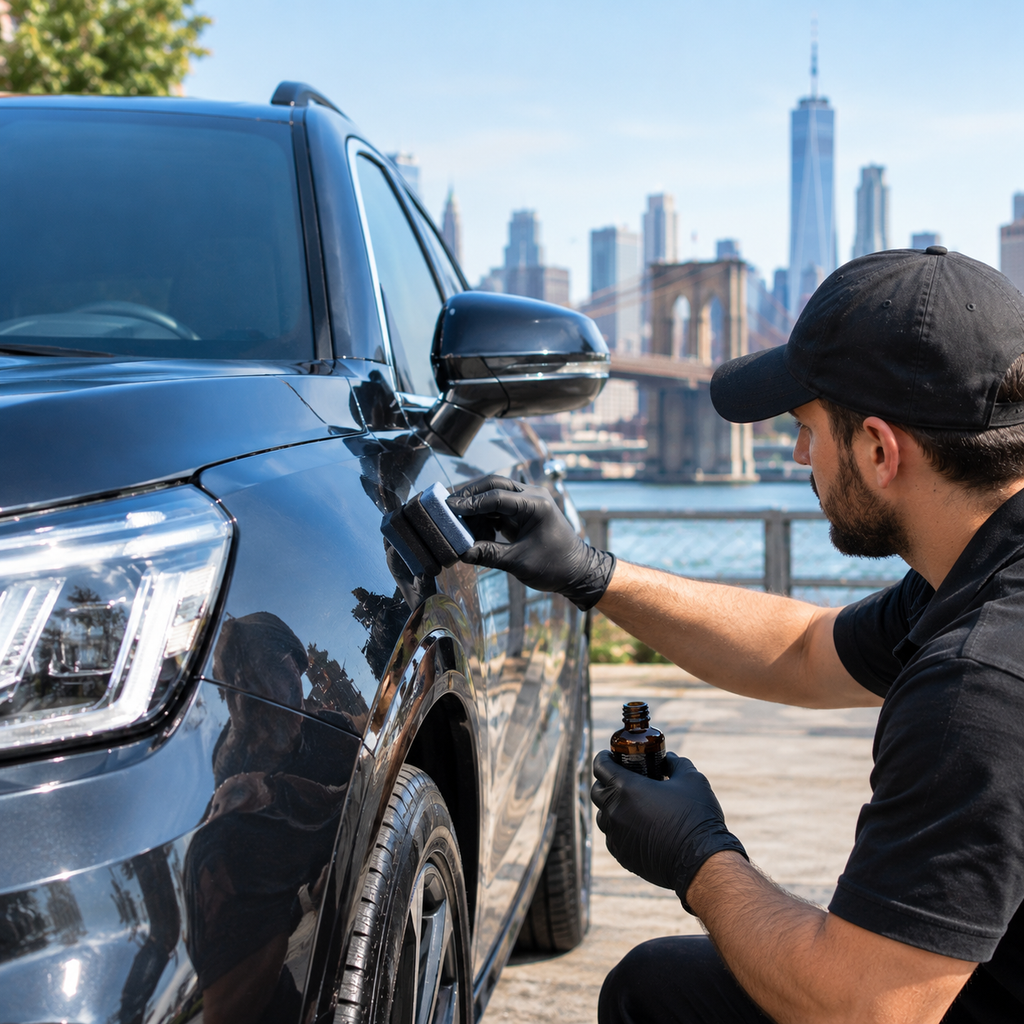
Ceramic coating brings professional paint protection directly to your home, workplace, or another suitable location. Instead of driving to a detailing shop and leaving your vehicle there, you can arrange for a detailer to work at your location.
The process involves cleaning the vehicle, removing stuck-on dirt, preparing the paint, and applying a liquid ceramic coating. Once cured, the coating forms a durable protective layer that improves shine, helps repel water, and makes routine cleaning easier.
For Brooklyn drivers, this service can be especially convenient. Street parking, busy schedules, road salt, and city pollution can make regular vehicle care challenging. On-site service reduces the need to travel to a shop, provided your parking location and weather conditions allow the work to be completed properly.
However, convenience should never come at the expense of quality. The paint must be properly prepared, and the coating needs suitable conditions to cure.
How Does Ceramic Coating in Brooklyn Work?
A professional appointment follows several steps. The exact process depends on your vehicle’s condition, the coating product, and the package you choose.
Step 1: Vehicle Inspection and Setup
The detailer begins by checking the vehicle’s paint for dirt, scratches, swirl marks, water spots, and other visible imperfections. This helps determine how much preparation is needed before applying the coating.
The technician also checks the work area. A suitable location should provide enough room to move around the vehicle safely and protect the paint during application.
If you live in an apartment building or park on the street, tell the service provider about your parking arrangements when booking.
Step 2: Thorough Washing
The vehicle receives a careful exterior wash to remove loose dirt, dust, traffic film, and road grime.
This step is important because applying a coating over dirty paint can trap contaminants beneath the protective layer. A careful wash creates a cleaner surface for the next stages.
Brooklyn vehicles may need extra attention around the wheels, lower doors, bumpers, and other areas that collect road salt and grime.
Step 3: Paint Decontamination
A regular wash may not remove every contaminant. Tiny particles from brake dust, road residue, and other sources can remain attached to the paint.
The detailer may use chemical cleaners and a clay bar treatment to remove this embedded contamination. The method depends on the vehicle’s condition and the coating package.
Proper decontamination helps create a smoother surface and prepares the paint for polishing or coating.
Step 4: Paint Correction and Surface Preparation
If the paint has swirl marks, light scratches, or dull areas, polishing may be recommended before the coating is applied. Paint correction helps improve the finish by reducing visible imperfections.
Not every vehicle needs extensive correction. A newer car in good condition may need less work than an older vehicle that has spent years parked outdoors.
After preparation, the technician cleans the surface to remove polishing residue, oils, and other materials that could interfere with the coating’s bond.
Step 5: Ceramic Coating Application
The detailer applies the ceramic coating in controlled amounts, usually working on small sections at a time. The product is spread evenly, allowed to settle according to its instructions, and leveled to reduce visible streaks or high spots.
Professional coatings require attention to timing, temperature, humidity, and application technique. Rushing this step can affect the final appearance and performance.
Once the coating is applied correctly, the paint can develop a glossy finish with improved water repellency.
Step 6: Curing and Final Inspection
After application, the coating needs time to cure. Initial setting and full curing are not always the same, so the technician should explain when the vehicle can be driven, exposed to moisture, or washed.
Before finishing, the detailer checks the paint under suitable lighting to identify uneven areas or application marks.
You should also receive aftercare instructions, including how long to avoid washing the vehicle and which cleaning products to use.
What Do You Need for an On-Site Appointment?
One common question about ceramic coating in Brooklyn appointments is whether the customer needs to provide special equipment or a covered parking area.
The answer depends on the service provider’s setup and the conditions at your location.
Do You Need a Garage or Covered Space?
A garage or covered space can help protect the vehicle from rain, direct sunlight, wind, and airborne dust during application and curing.
Some detailers may be able to work outdoors when conditions are suitable. However, direct sun, strong wind, rain, and dust can interfere with the process.
Ask the provider whether your driveway, private parking space, or street parking location is suitable. Never assume that every outdoor location will work.
Do You Need to Supply Water or Electricity?
Some detailers bring their own equipment, while others may require access to water or electrical power.
Ask these questions before confirming your appointment:
- Does the technician bring water and power?
- Is access to an electrical outlet required?
- Can the service be completed in your parking area?
- Are there any building or parking restrictions?
Confirming these details in advance helps prevent delays on appointment day.
What Happens If the Weather Is Bad?
Weather is an important factor in coating application. Rain, high humidity, extreme temperatures, and wind may affect application or curing, depending on the coating manufacturer’s requirements.
If conditions are unsuitable, the provider may recommend a covered location or reschedule the appointment. It is better to wait for proper conditions than to risk a poor finish.
How Long Does Ceramic Coating Take?
The time required depends on the vehicle’s size, paint condition, and selected coating package.
A simple application on a well-maintained vehicle may take several hours, while a full service involving decontamination and paint correction can take most of a day or longer.
Curing adds another consideration. Some coatings become ready for careful use relatively quickly, but others require a longer period before the vehicle can be exposed to water or washed.
Before booking, ask the detailer for an estimated appointment length and specific curing instructions. Do not assume that the vehicle will be ready for normal use immediately after application.
How Much Does Ceramic Coating Cost?
Pricing depends on the coating product, vehicle size, paint condition, and amount of preparation required.
Big Shiny Apple’s published ceramic coating packages start at $699 for R1 Pro Basic, $799 for R1 Pro Standard, and $999 for R1 Pro Premium. These packages list five-year protection, while the final price may vary with vehicle size and condition. Confirm current pricing and appointment details directly with the company.
Paint correction, additional coating coverage, and other services may increase the total cost. When comparing quotes, check what preparation is included rather than choosing a service based on price alone.
How to Find the Right Ceramic Coating Service
When searching for ceramic coating near me, compare providers based on their preparation process, coating products, experience, and aftercare guidance.
Look for a service that:
- Inspects your paint before recommending a package.
- Explains whether paint correction is needed.
- Identifies the coating product and expected lifespan.
- Provides clear instructions for curing and maintenance.
- Confirms that your parking location is suitable.
A good provider should explain what the coating can and cannot do. Ceramic coating can help protect against certain environmental contaminants and make cleaning easier, but it does not make paint scratch-proof or prevent rock chips.
Book Ceramic Coating With Big Shiny Apple
Want professional paint protection without making an unnecessary trip to a detailing shop? Big Shiny Apple Auto Wash Inc offers auto detailing, paint correction, and ceramic coating services for NYC drivers.
Its ceramic coating options use R1 Coatings® products, with packages designed around different preparation and protection needs. Contact the team to confirm service availability at your Brooklyn location, discuss your vehicle’s condition, and choose a suitable package.
Frequently Asked Questions
Can ceramic coating be applied at my home in Brooklyn?
Yes, if the service provider offers appointments at your location and your property has suitable working conditions. Confirm parking access, space, and weather requirements before booking.
Does ceramic coating require a garage?
Not always. Some jobs may be completed outdoors, but a covered area can provide better protection from rain, dust, wind, and direct sunlight. The technician should confirm whether your location is suitable.
How long does ceramic coating take?
The appointment may take several hours or most of a day, depending on paint preparation and the selected package. The coating may also need additional time to cure before normal washing or exposure to moisture.
Do detailers bring their own water and power?
It depends on the provider. Ask whether the technician brings the necessary equipment or needs access to water and electricity at your location.
Is ceramic coating worth it?
It can be worthwhile if you want professional paint protection and the convenience of service at your location. The coating can improve gloss, repel water, and make routine cleaning easier, but regular maintenance is still necessary.
How do I book a ceramic coating service?
Review the provider’s packages, confirm that service is available at your location, and ask about preparation, pricing, and curing time.